

Data Driven Comfort
Designing the future of automotive seating
As autonomous vehicles reduce the need for active driving, understanding seating comfort in reclined postures is becoming increasingly important
Course
Future Mobility
Main Deliverables
Research Paper
Expertise areas
Technology & Realization, Math, Data & Computing; Technology & Realization
Date
June 2026

This project revolutionizes the way we approach seating in autonomous vehicles by bridging the gap between theoretical posture definitions and population-level seat-contact geometries. The result is an empirically grounded framework that enables the design of seats that accommodate 90% of the population with more comfort than previously possible.
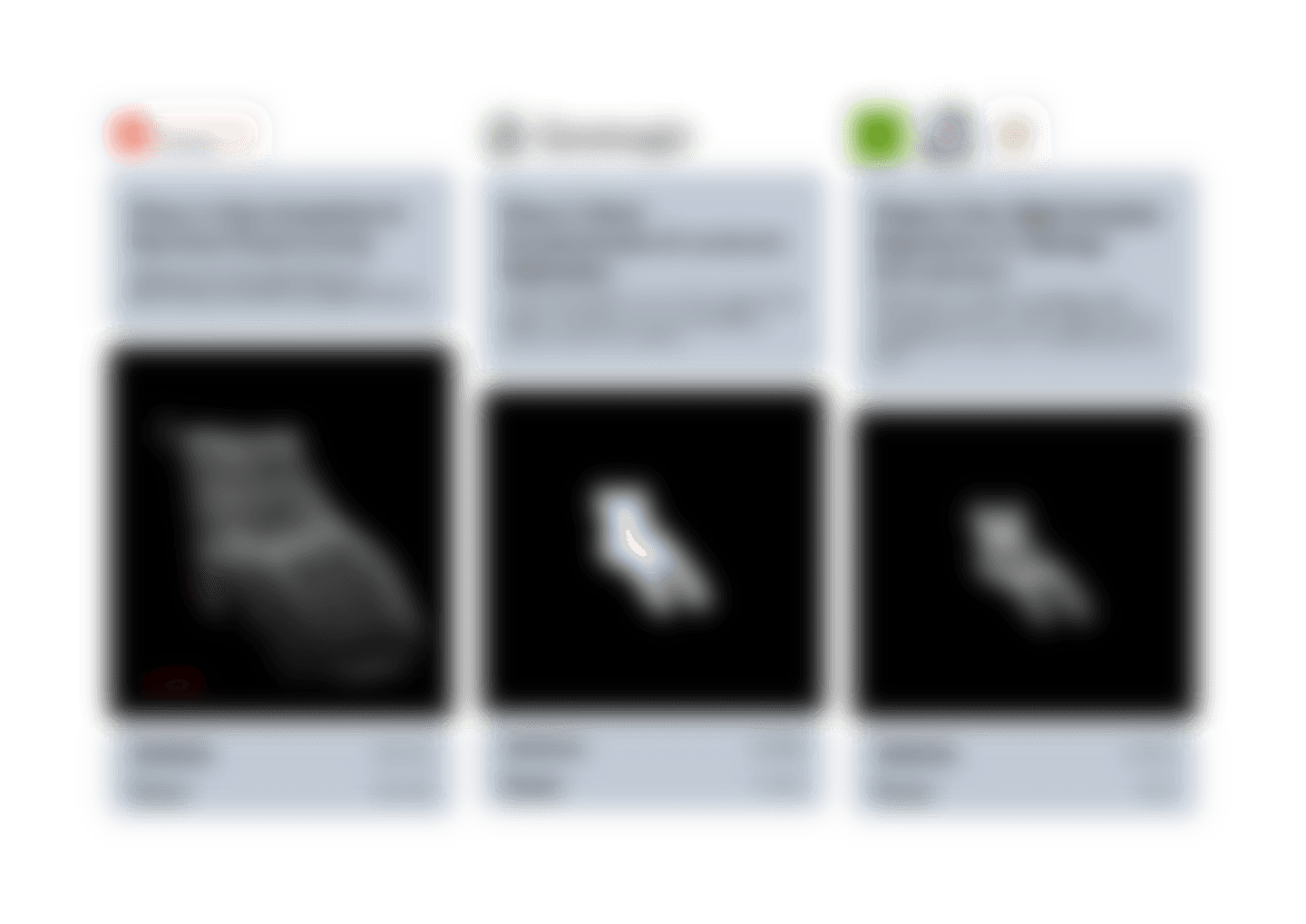
Current seat design approaches rely heavily on simplified joint-angle definitions, failing to capture the natural 3D shape variability across different users. To build a more accurate foundation, geometric data was collected from 33 participants in research-backed neutral body postures, generating 66 highly detailed surface scans.

Transforming this raw data into a usable format required a robust mathematical approach. A non-rigid registration pipeline was utilized to establish exact point-to-point correspondence across scans. This critical alignment enabled the aplication of a principal component analysis to map out the core patterns of human shape variation.

The culmination of the project is a computational program capable of capturing and recreating complex 3D body shapes using only a small number of adjustable parameters and can be used to design chairs that accomodate a wide range of body shapes from 5th to 95th percentile of the dutch population.
